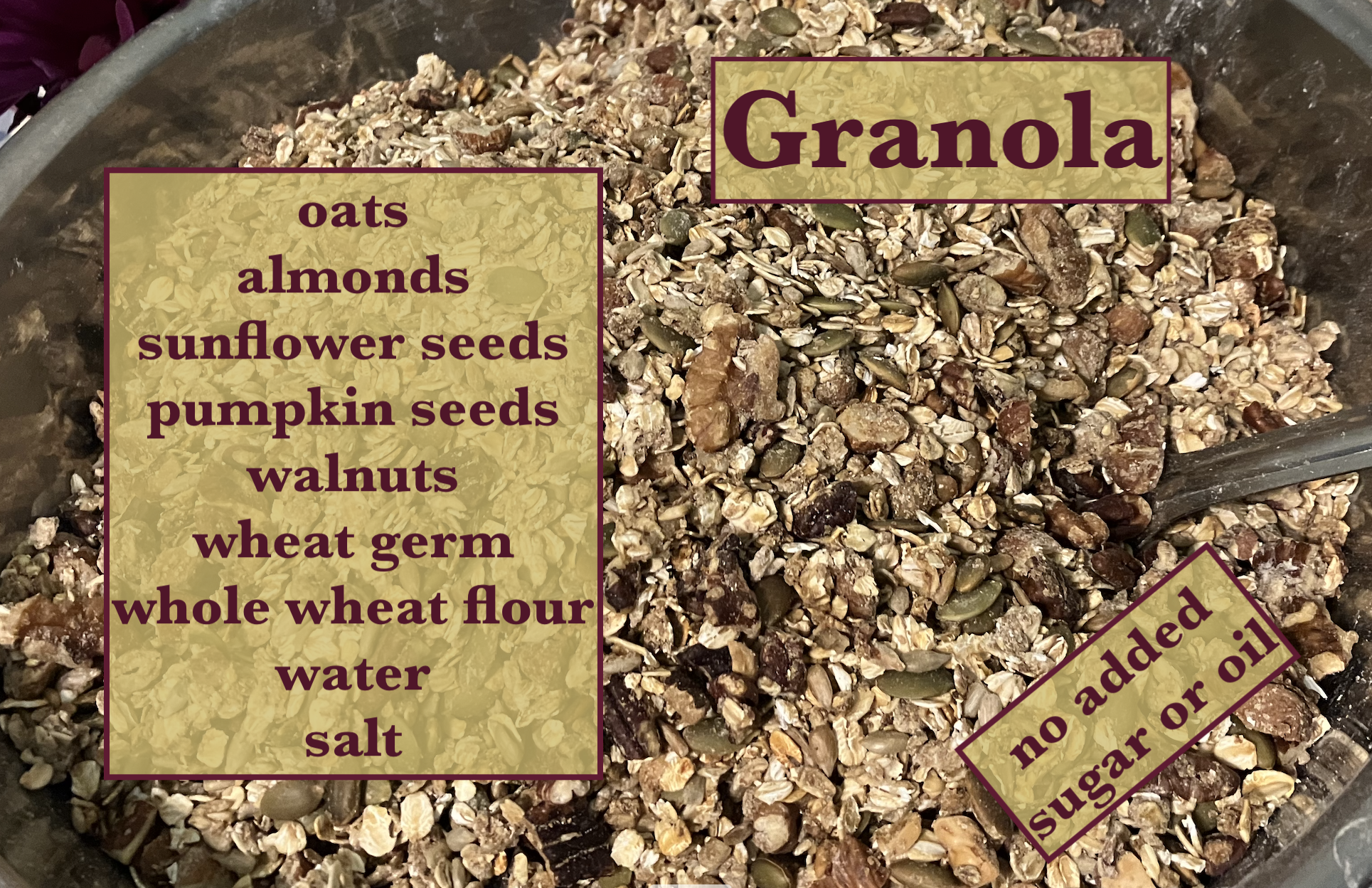
It’s back to school time and a jumbo batch of granola just came out of the oven. Since I last posted a granola recipe here (13 years ago!) I have made some important changes to the recipe. I have stopped adding oil or any kind of sweetener such as honey or maple syrup to my granola. The nuts and seeds contain plenty of healthy oil in whole food form. All the sweet we need comes from fresh chopped fruit which we stir into our bowl when we eat.
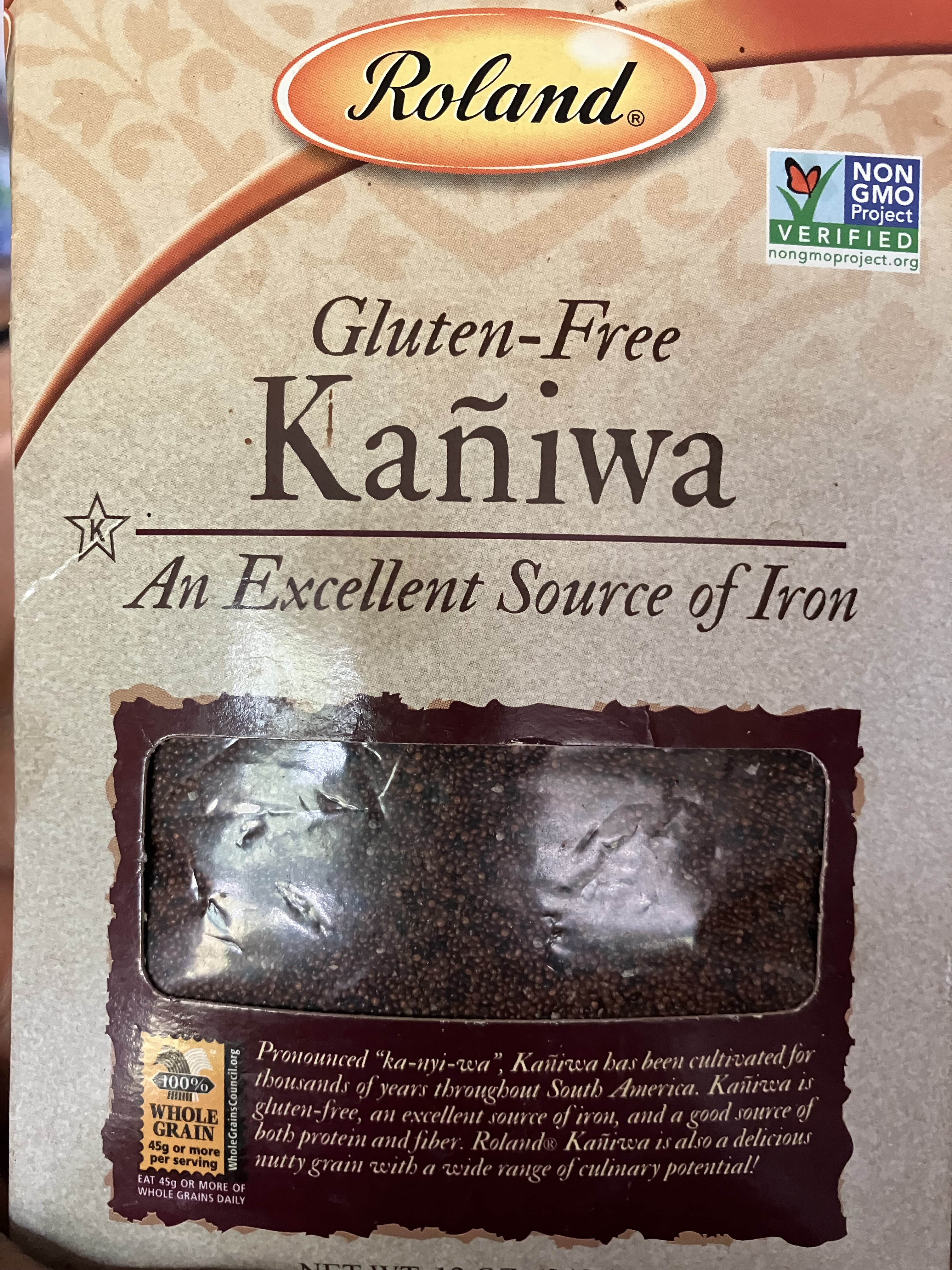
Lest it be said that I left any grain untried when it came to the dosa … kañiwa is the latest grain, to be soaked, and ground into dosa batter. I have actually had the grain on the shelf for a while, thanks to my friend Lisa. One fine day she just asked if I could use it … presumably she had bought it but never got around to using it. A similar fate was to befall me, until yesterday.
I decided to pour the entire packet – only one pound, after all – into a bowl to soak for dosas. Just before adding water curiosity got the better of me and I scooped out half a cup to cook like rice. As expected, it cooked just like rice and tasted good too. I am not sure I managed to chew every grain though. Kañiwa is tiny! Half the size of quinoa, according to nuts.com. “Both quinoa and kañiwa have a delicious nutty flavor, although kañiwa is slightly sweeter than quinoa. Additionally, kañiwa has a slightly crunchy texture, while quinoa is fluffy and soft.” (Tilde added for consistency (and coolness.)) I didn’t detect any crunch after cooking.
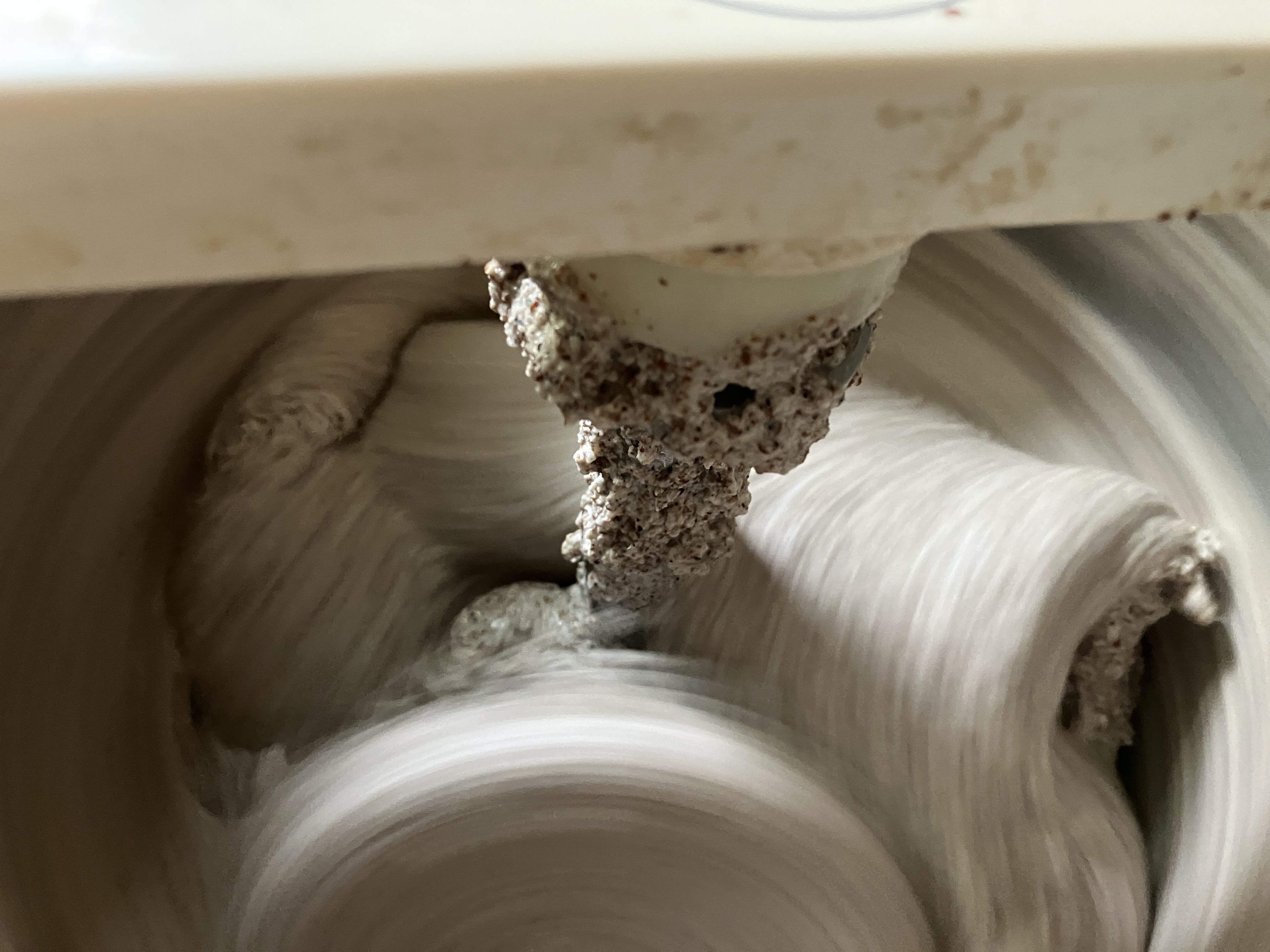
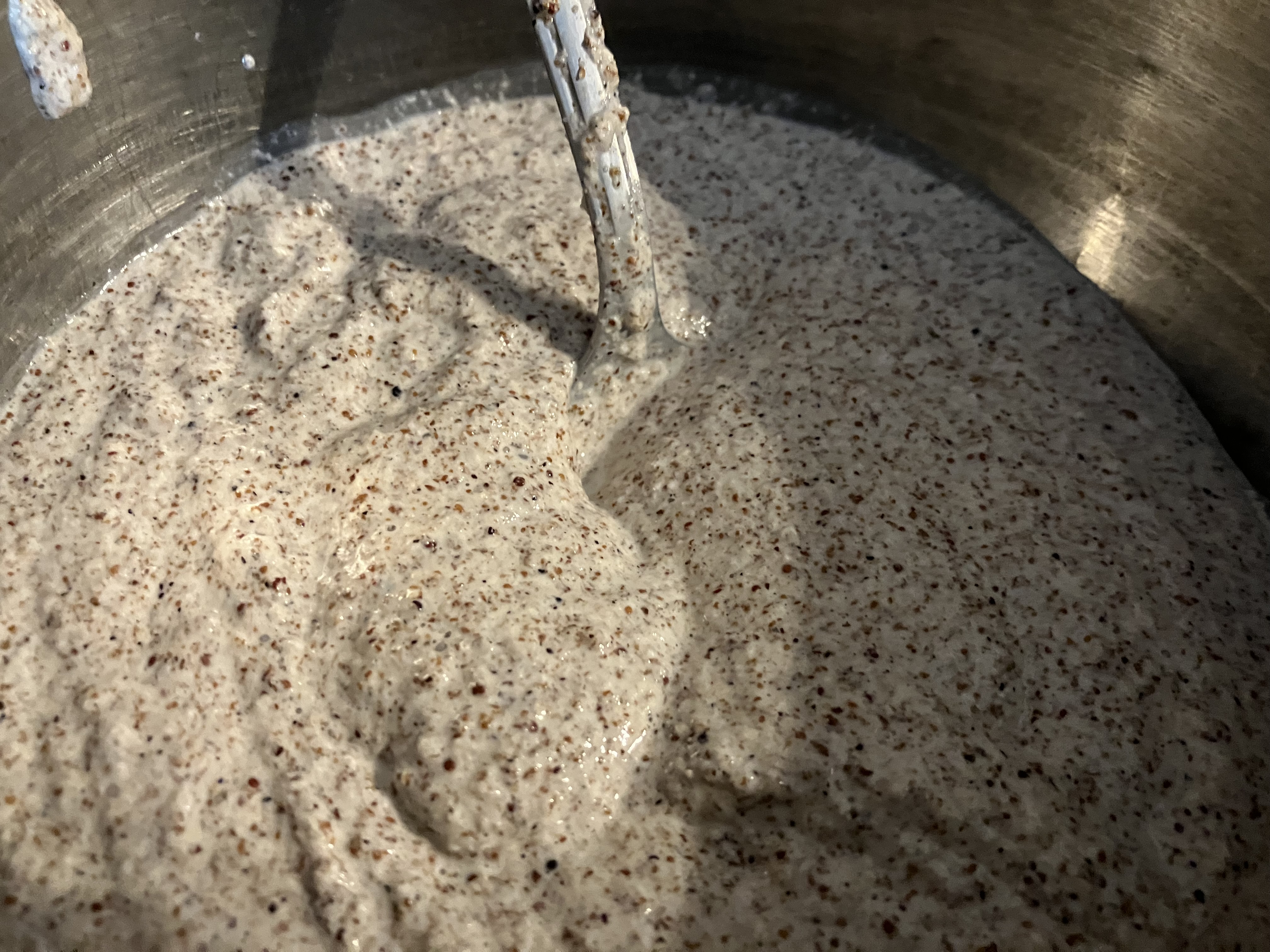
I added an equal amount of minapappu aka urad dal or black gram and soaked it overnight. I forgot until the next evening but the upside of this sudden fall weather is that it is cold enough that the extra long soak was ok. I ground in the evening. The next morning it had risen impressively in spite of the cold weather. Wow!
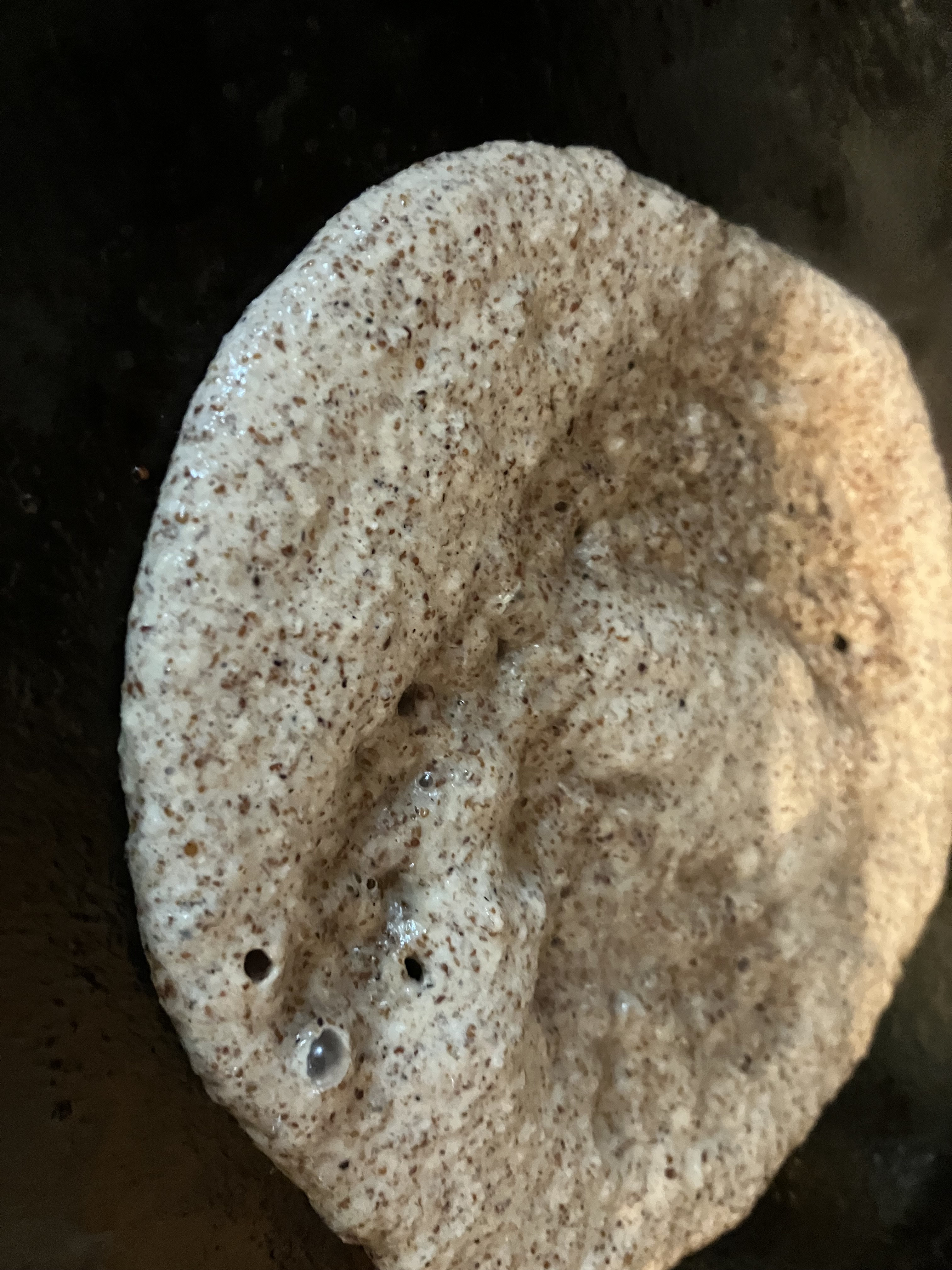
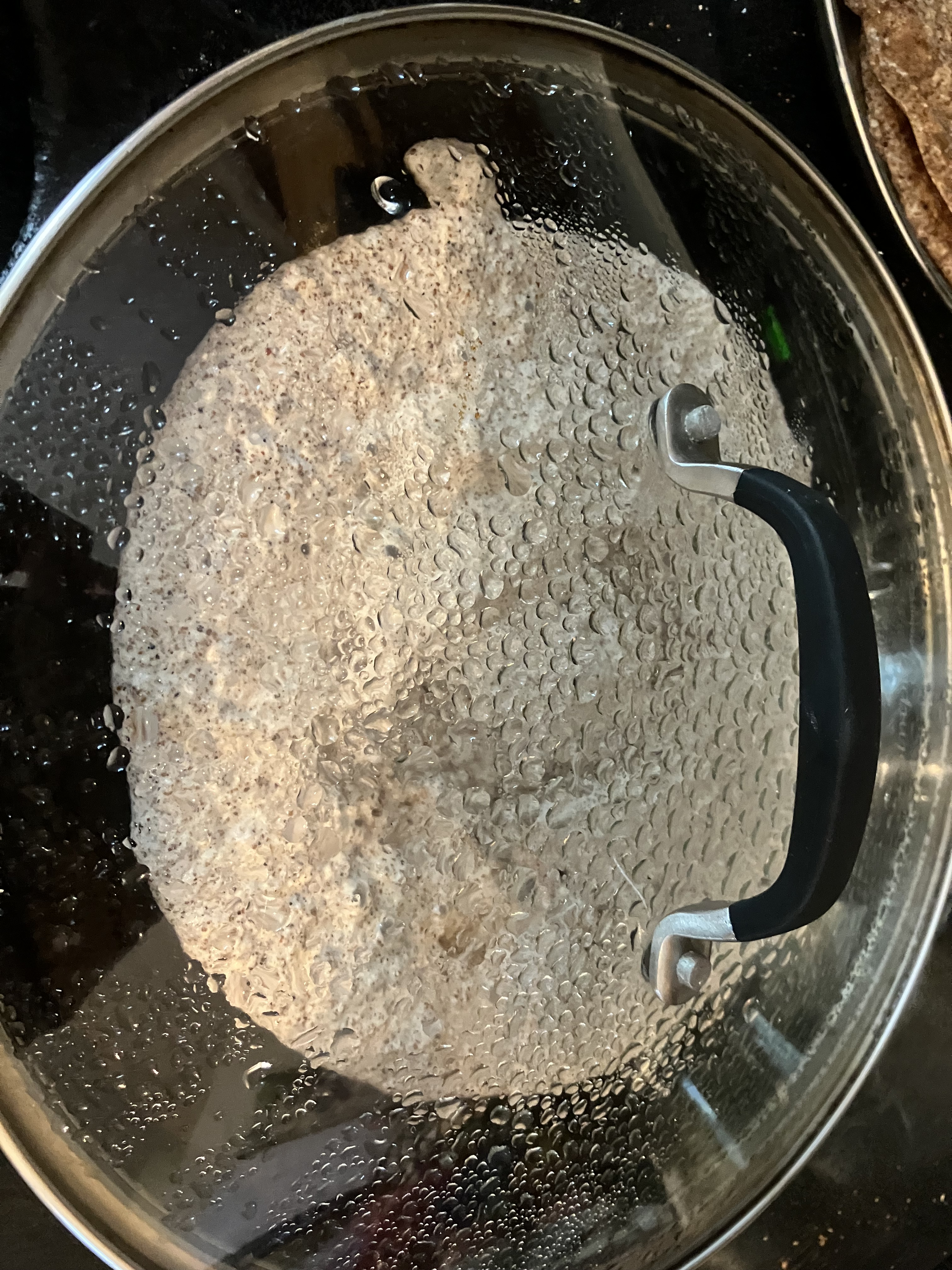
On the pan, the kañiwa dosa fluffed up and even bubbled. Now I realize I should have taken photos of the finished dosa. Too late as they are all finished as in eaten up. Perhaps I will be back with pictures next time I make them. Not sure when or if I will come across kañiwa again, but when that day comes I will snap it up and whip it into dosas without delay!
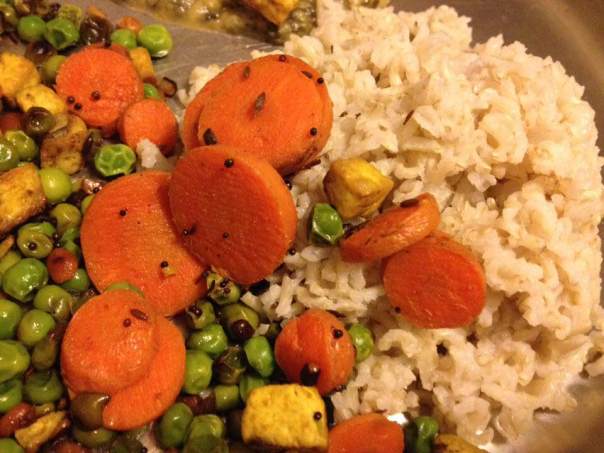
A trusty combination that goes well with millet or rice, this colorful dish will satisfy the whole family and fetch compliments at potlucks.
Sizzling spices liven up chopped vegetables every time. If you find peas and carrots too sweet to eat as a main dish, try it this way, with some tofu, ginger and the South Indian spice combination known as tiragamuta. Read the rest of this entry »
In the mass conversion towards refined and processed foods that has swept much of the world over the past few generations, many foods normally occurring in a wide variety of earth tones, became white, as if a formidable fairness cream had descended upon the food industry. White flour, white sugar, white bread, white spaghetti, white rice, white upma ravva, white urad dal occupied the markets. At first a status symbol for those who could afford them, refined foods later became a status symbol for those who need not eat the coarser grains because they lived a delicate life and could hire workers to do their heavy lifting for them. Eventually they themselves became cheaper than their whole grain counterparts, while the nutritious polish and peels were diverted to the livestock industry.
Thirty years ago, Sidney Mintz unpacked the social, economic and political context of food in his seminal work, Sweetness and Power. The history of whiteness and power with respect to food offers much to explore. While evolutionary biology may account for our predilection towards the quick calories that processed foods offer, taste and food habits evolve under a variety of influences and cultural messages. Read the rest of this entry »
Not more than a few generations. And if you look at all things that have become white over the past century, one by one they are regaining their color. White bread, white pasta, white flour, white sugar, white rice are now recognized as more or less empty calories and are being replaced by their whole counterparts, on the brown to black side of the color spectrum. It is time for idlis to do the same.
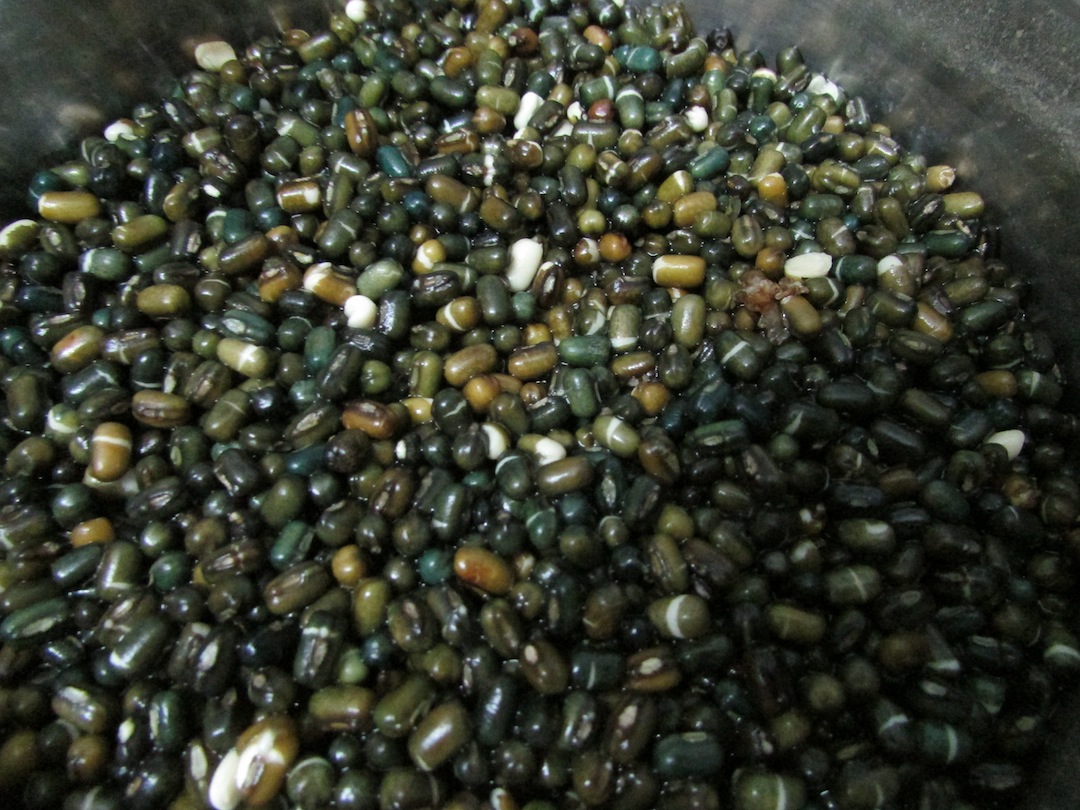
Black Gram (Urad): Soaked and ready to burst out of its skin! Urad or Black Gram attracts wild yeast from the air. As it ferments, the yeast makes the batter rise.
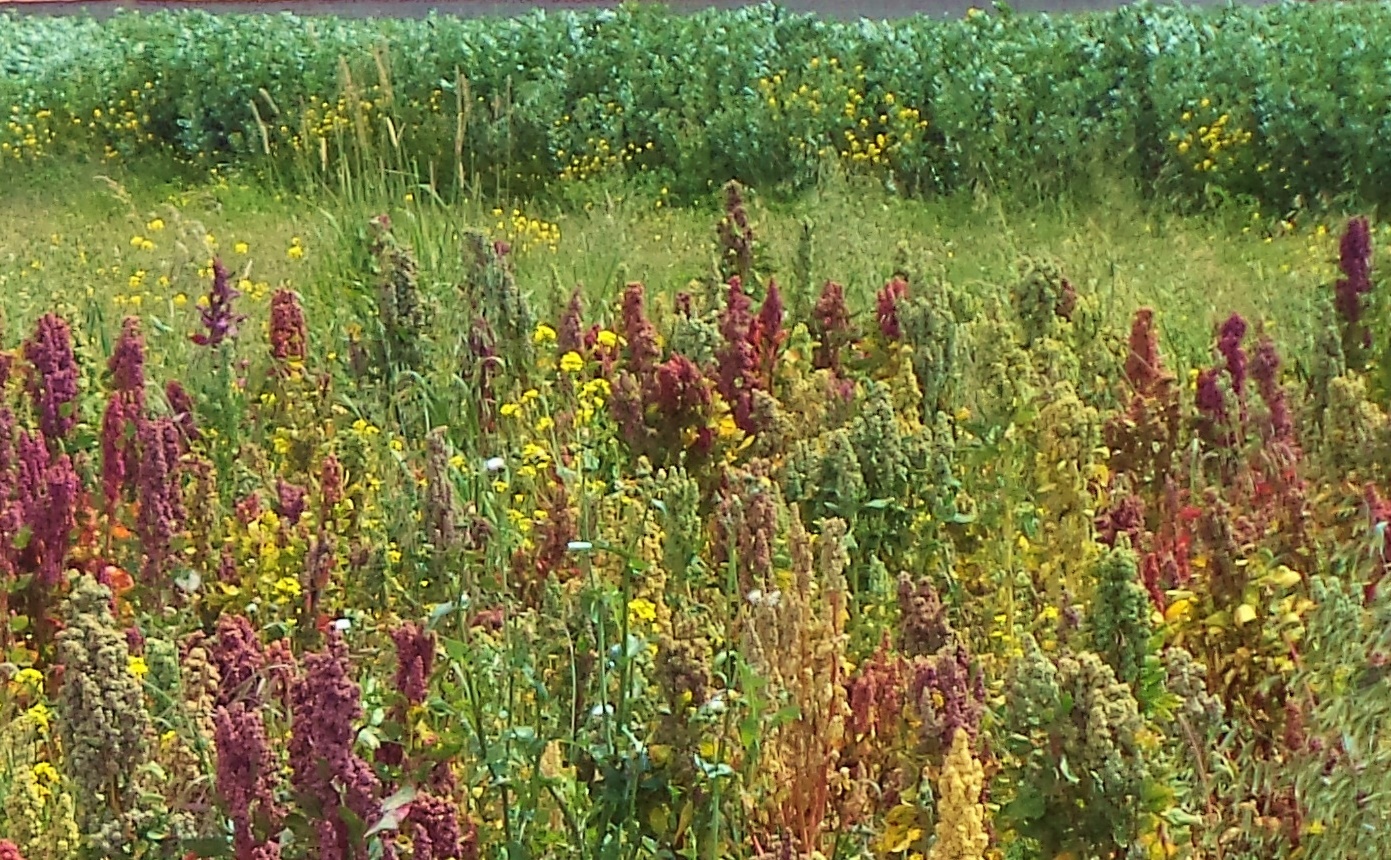
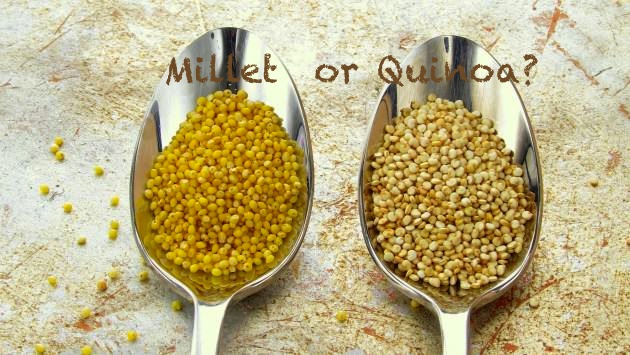
Quinoa is a wonderful grain but does it make sense to grow and eat it far away from the Andes Mountains where it traditionally grows and where it has been a staple grain for the common people before the worldwide boom raised the price? Rather than chasing after grains from around the world, we would do better for our own health, for the right to food for all, and for the earth if we explored the diversity of grains that grow well in the climate and soil wherever we live. Readers in the United States and in India can find easy ways to get started using a variety of local millets in lieu of rice and wheat in standard preparations such as idli, dosa, pulao and pulihara, and from there get more adventurous with millets.
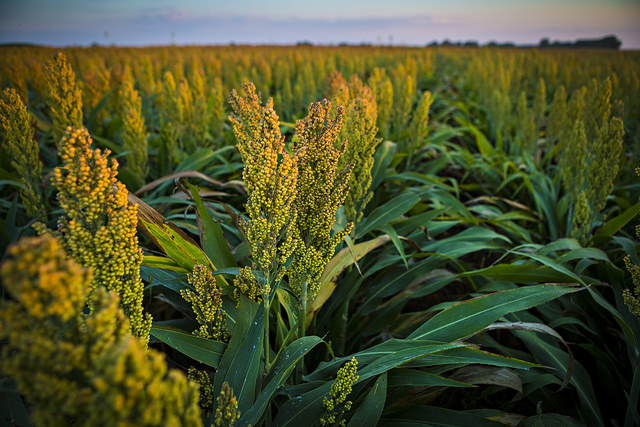
So I have waxed enthusiastically about sama, korra, kodo, ragi, and other millets grown in India. Readers in the US have asked, how can we use local grains? What can I do with the millet available in the grocery stores? And: what kind is the millet available in the grocery stores in the US? And is it as wonderful for our people and planet as all the millets we hear about in India? Read the rest of this entry »
I have been trying to understand how toddler’s tastebuds change, but unable to find right sort of literature for it. My son used to love all fruits and green smoothie until he was 11 months old. His appetite reduced a great deal and after sometimes his tastebuds too changed drastically. Slowly he stopped eating fruits and green smoothie. He only used to have some bits of watermelon until 10 days ago. He stopped that too now. He only eats occasional chickoo.
Yummy in my tummy!
I had read in several places about how mother’s diet affects child’s liking to certain foods through breastfeeds. I have done everything by the book, consumed lots of greens, fruits, etc. I thought it was working too until quite recently. I really want to understand how his mind works and chooses certain foods over others. Will he ever get back to fruits now?Read the rest of this entry »
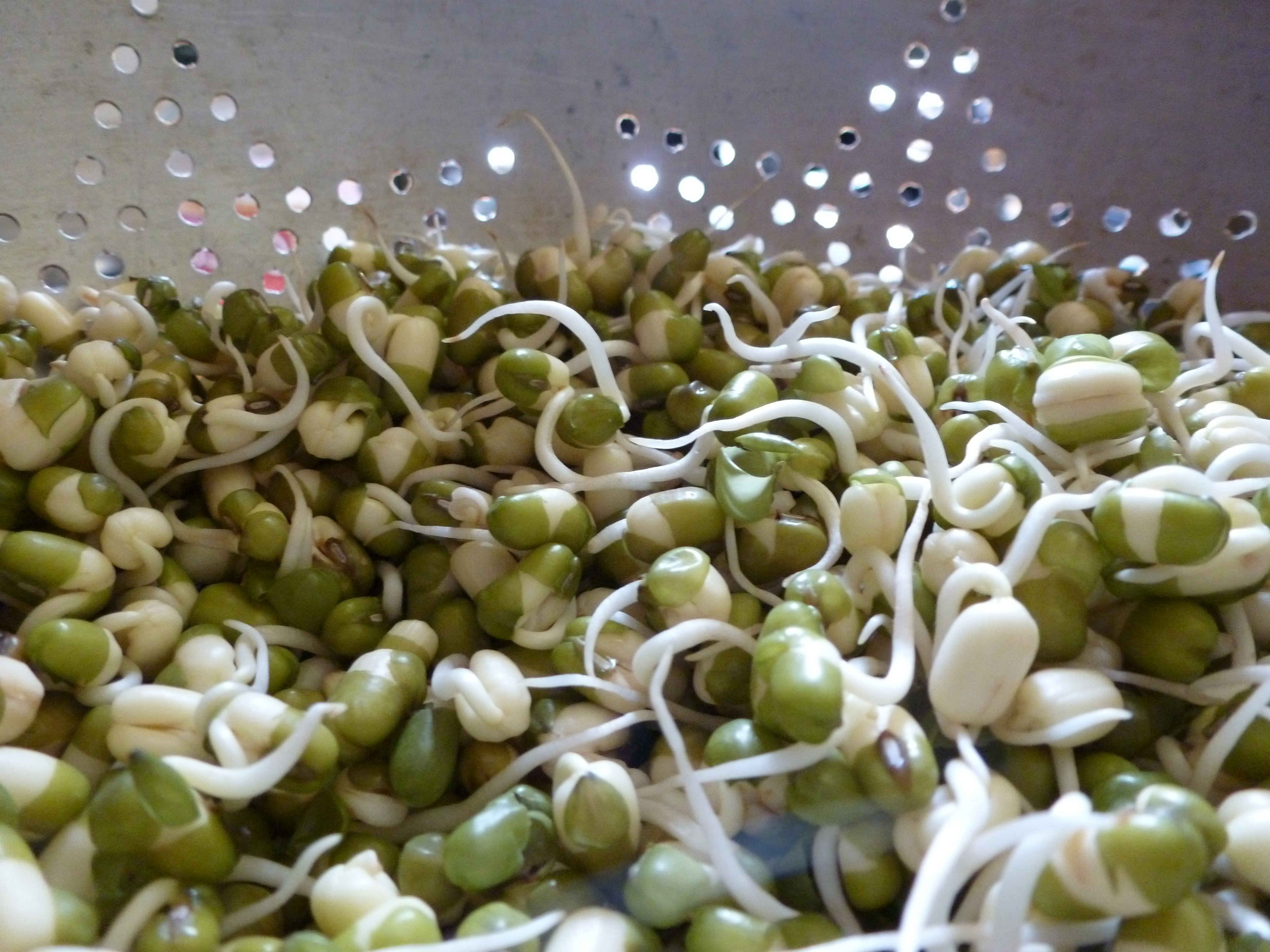
Are sprouts a good source of probiotics? How can we increase probiotics in our diet?
Amma of a 4-year old in Bangalore
Well, Chetana, thanks for asking. Many of us know generally that soaking, sprouting and fermenting all have an important role to play in making nutrients more available. Considering that the grains themselves do most of the work, it’s a wonder that in spite of knowing this we don’t always do it. There could hardly be an easier way to multiply nutrients while doing nothing. Now let us look at how and what.
Dancer, Writer, Yogi and Mama, Mirabelle D’Cruz from Mumbai shares the secrets of her backpack, her sling, and getting back to “plurk” with baby in tow.
They tell you that once you have a decent job and get married, you will be “settled.” Then they tell you you will only be really settled once you have kids. I was always critical of the settled business, though I can see value in the concern of those who talk about it. Even if you have a child, like my husband and I, when you truly feel ready, have been a party-holic, travel –holic and how can I forget work-a-holic and know you’ll have no regrets because you lived your life fully and don’t feel an ambitious desire for position, lifestyle or keeping up with the Joneses, the roller-coaster will only start after the LO arrives. This is not a complaint or judgment on parenting, its an observation on learning, growing and most of all on integrating.
I’m sharing a little of my journey, as one of the possibilities to parenting, hoping it may provoke, inspire, help or just provide an interesting read.
Mirabelle leads an energizing session on West African Dance
Send your questions on health, hygiene, learning, discipline, sleep, sanity, serendipity, chaos and any other aspect of parenting, real or imaginary to askammanow@gmail.com



 Ask Amma