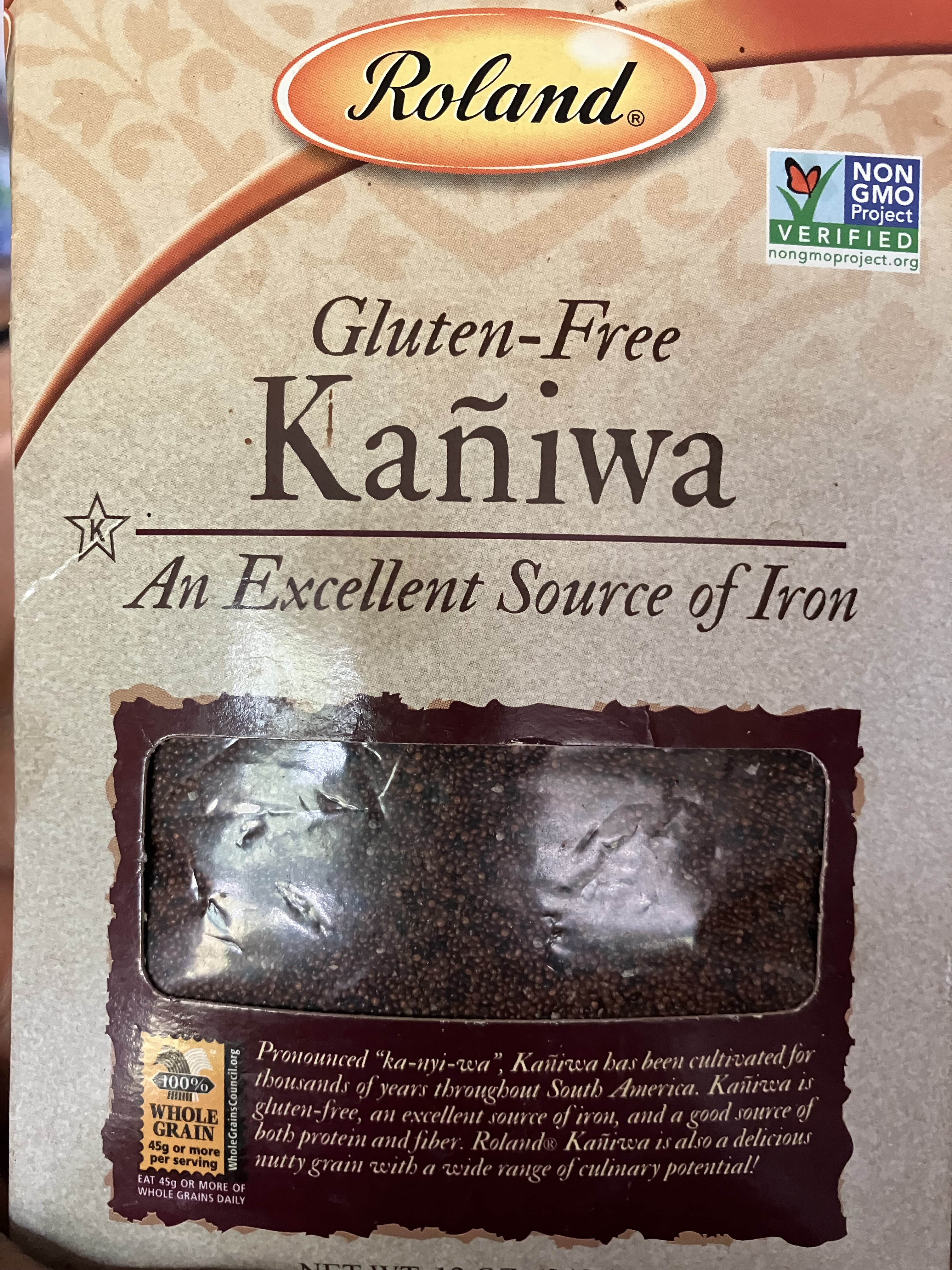
Lest it be said that I left any grain untried when it came to the dosa … kañiwa is the latest grain, to be soaked, and ground into dosa batter. I have actually had the grain on the shelf for a while, thanks to my friend Lisa. One fine day she just asked if I could use it … presumably she had bought it but never got around to using it. A similar fate was to befall me, until yesterday.
I decided to pour the entire packet – only one pound, after all – into a bowl to soak for dosas. Just before adding water curiosity got the better of me and I scooped out half a cup to cook like rice. As expected, it cooked just like rice and tasted good too. I am not sure I managed to chew every grain though. Kañiwa is tiny! Half the size of quinoa, according to nuts.com. “Both quinoa and kañiwa have a delicious nutty flavor, although kañiwa is slightly sweeter than quinoa. Additionally, kañiwa has a slightly crunchy texture, while quinoa is fluffy and soft.” (Tilde added for consistency (and coolness.)) I didn’t detect any crunch after cooking.
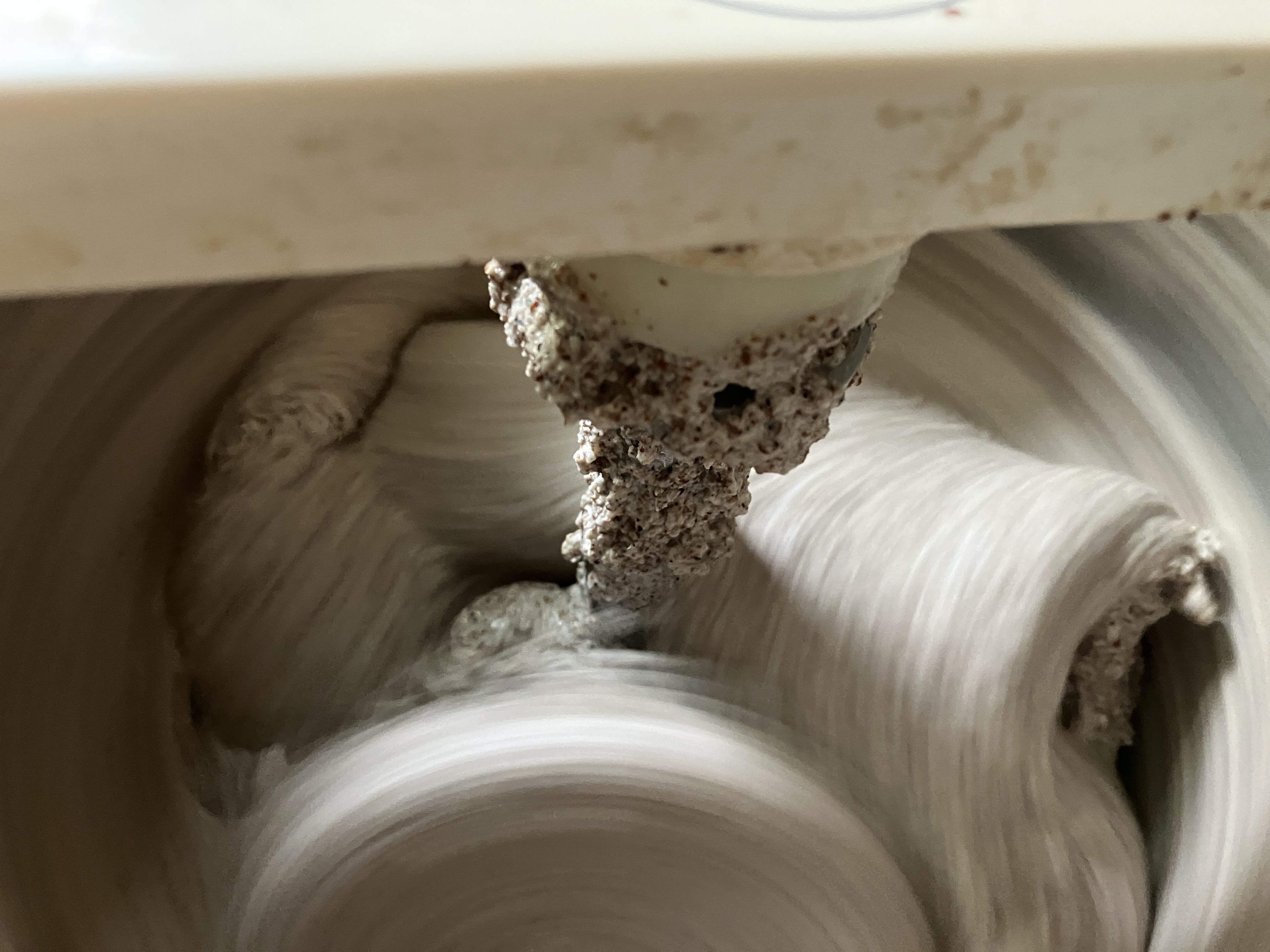
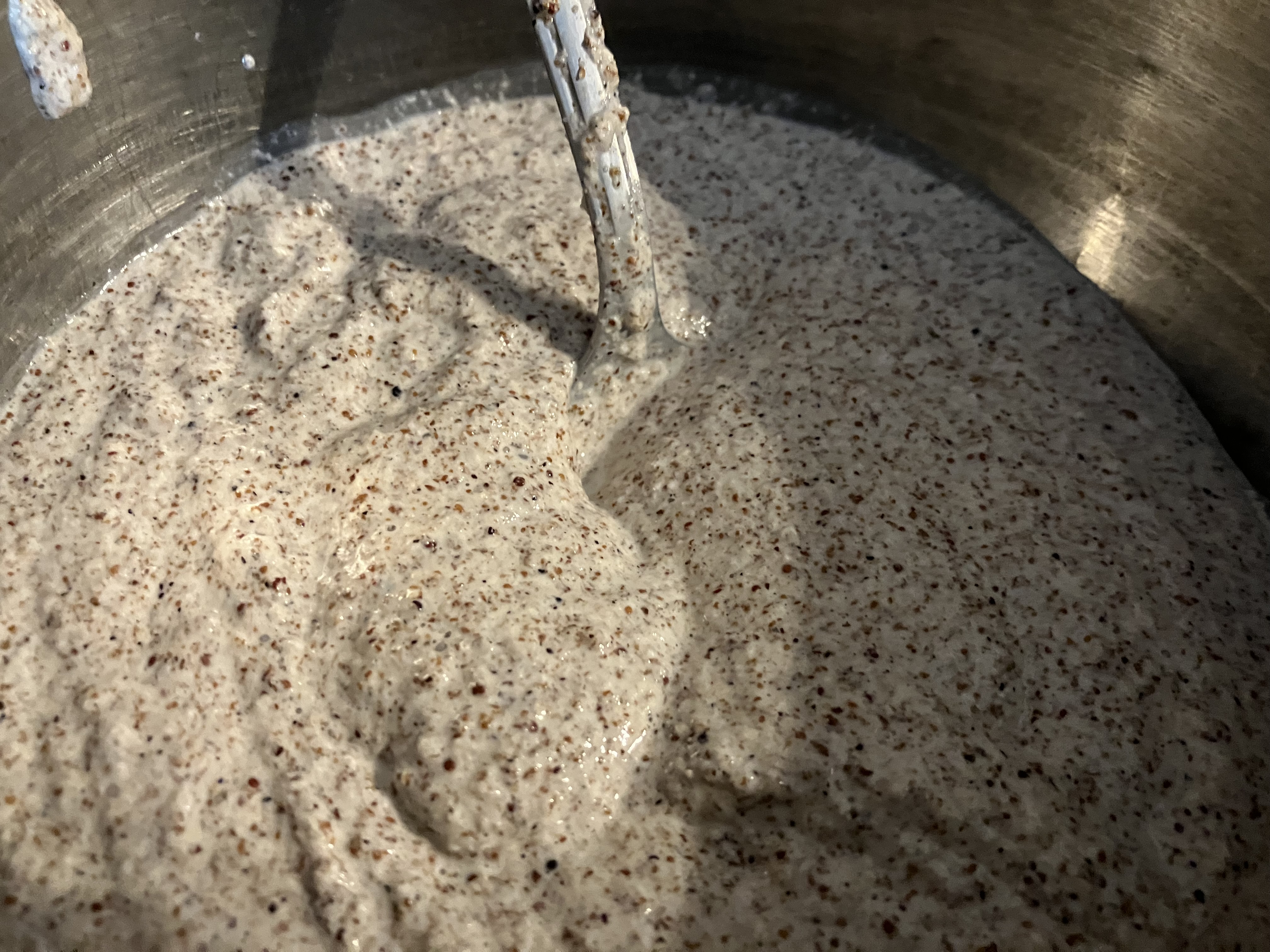
I added an equal amount of minapappu aka urad dal or black gram and soaked it overnight. I forgot until the next evening but the upside of this sudden fall weather is that it is cold enough that the extra long soak was ok. I ground in the evening. The next morning it had risen impressively in spite of the cold weather. Wow!
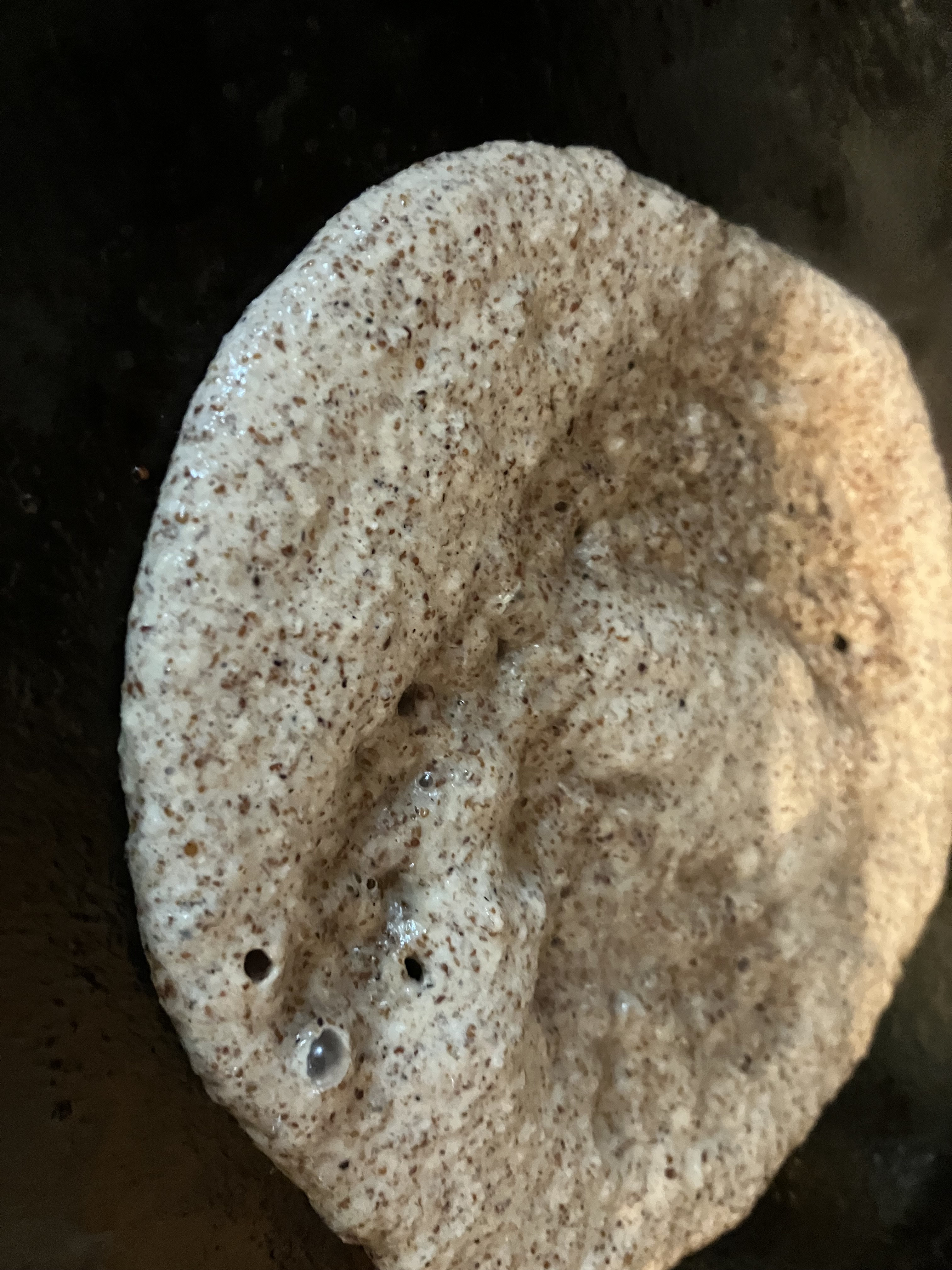
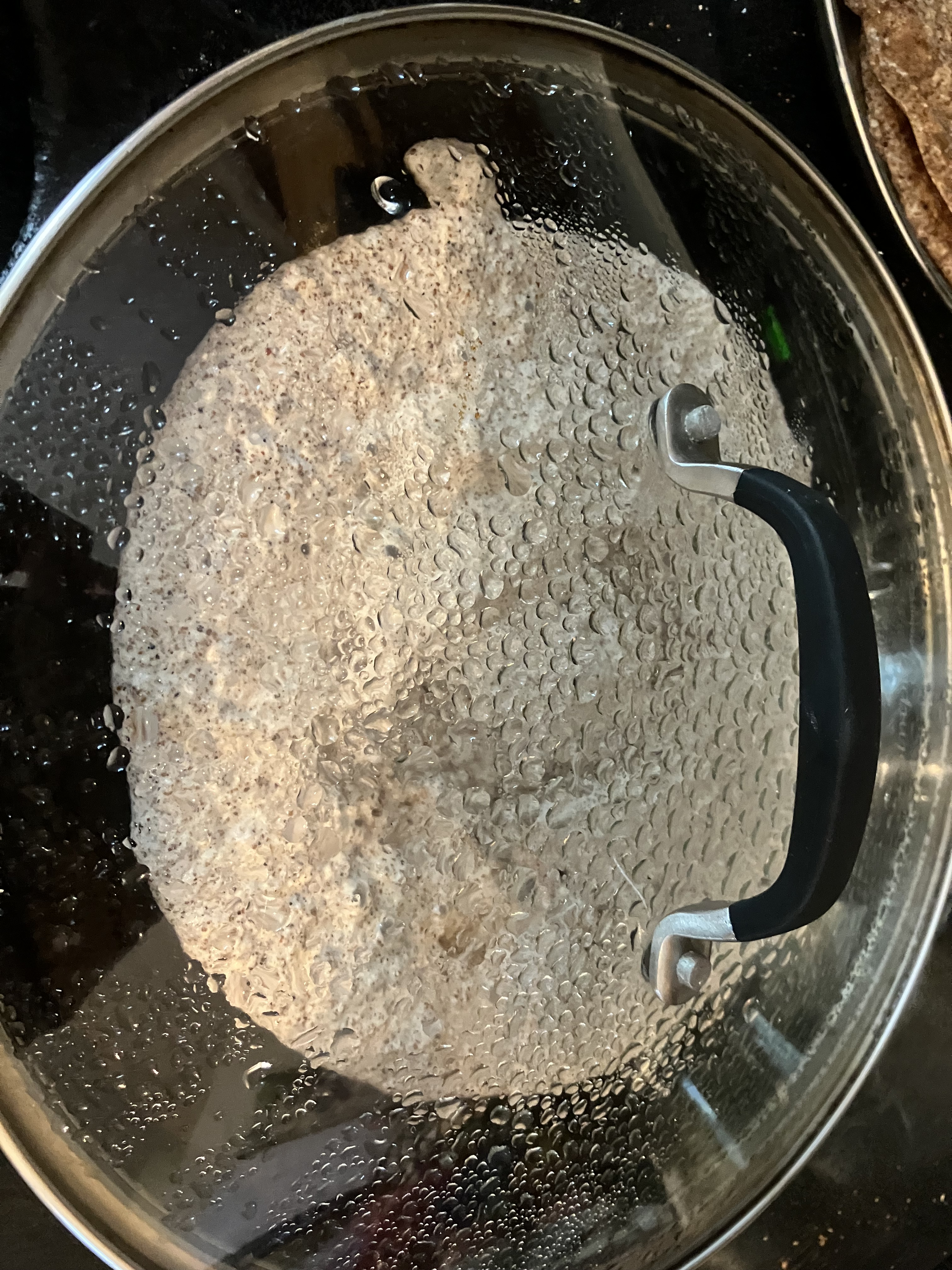
On the pan, the kañiwa dosa fluffed up and even bubbled. Now I realize I should have taken photos of the finished dosa. Too late as they are all finished as in eaten up. Perhaps I will be back with pictures next time I make them. Not sure when or if I will come across kañiwa again, but when that day comes I will snap it up and whip it into dosas without delay!
So in my enthusiasm for new, by which I mean ancient, grains I got a bag of Bob’s Red Mill kamut which for some reason* is always written with a registered trademark symbol, as in Kamut® and after months of wondering what to make with it and thinking I would have to mill it and find a bread recipe I looked at the recipe on the packet. DUH! It was delicious.
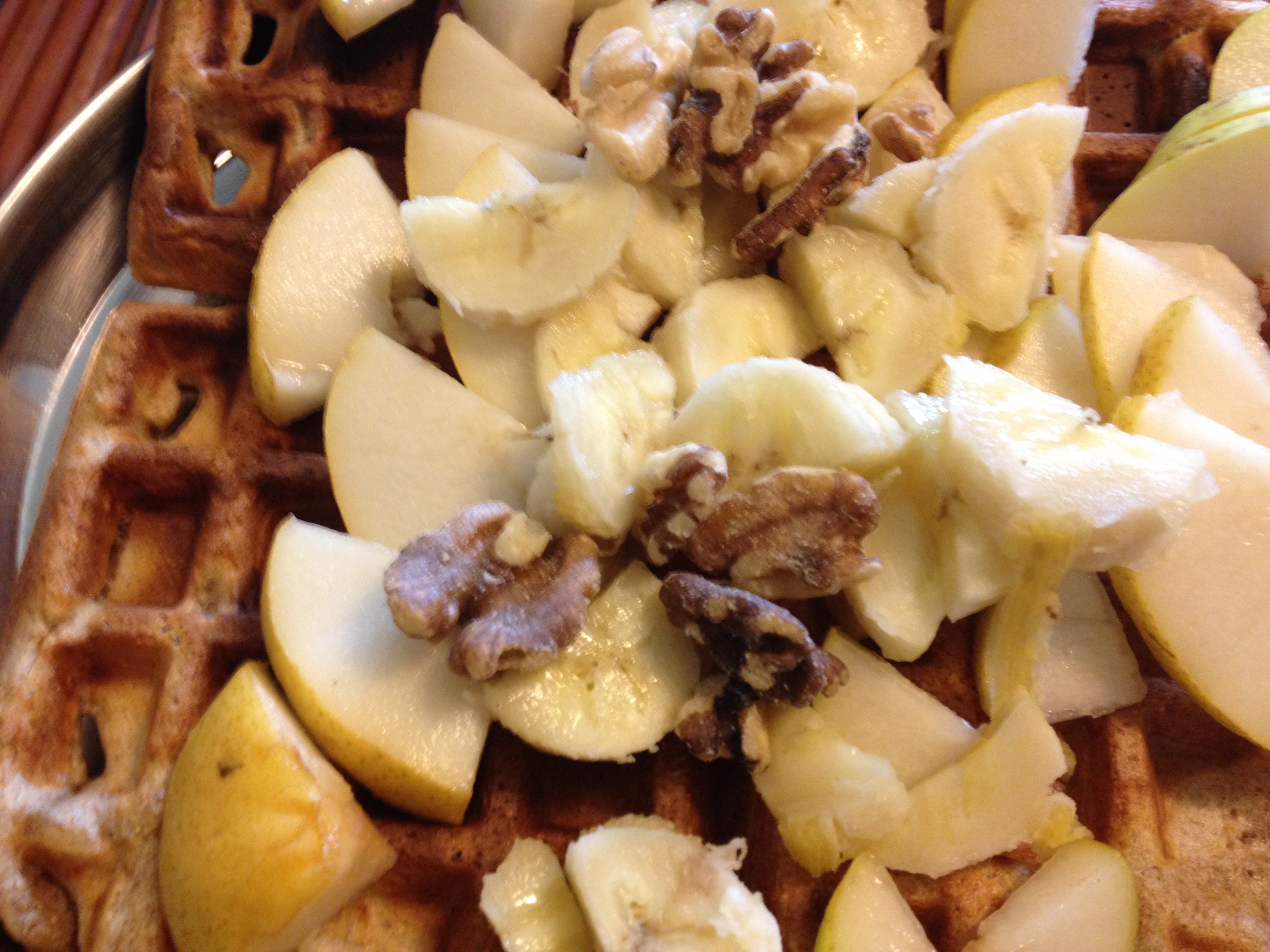
Is it possible to make waffles out of freshly ground spelt flour? 100% spelt, not even sifted or mixed with a lighter flour, just straight up spelt?
If you have ever wondered this, then you have come to the right place. I just plunged right in and made waffles with spelt flour I milled at home. The recipe is quite simple and you can use it for waffles or pancakes!
I think 2018 will have to be remembered as the year of Einkorn. Recently when trying to convey to my sister how ravenously exhilarated, how irrationally exuberant, how transcendentally euphoric I had become in the sannidhi of einkorn, Khiyali said, “I think it has replaced Taoism as her new religion.”
She said this because just a few months ago I was transported, I was understood, I was spoken to, by a verse from the Tao the Ching.
All the world talks about my Tao with such familiarity — What folly! Tao is not something found at the marketplace or passed on from father to son It is not something gained by knowing or lost by forgetting If Tao were like this It would have been lost and forgotten long ago
Let us simply say, I exhaled.
A sigh of such satisfaction, of longed-for understanding, such sense of being found, being at once remembered without ever having been forgotten, a reassurance of trust in the world, a touch of the ancients, the likes of which I had not felt before or since … until I found einkorn.
Is there anything like einkorn? No there is not.
To think I stumbled upon it almost by accident. For introducing me to einkorn I must thank my friend Lisa Kinney, who has been purveying the goods of the Amish to me … when I asked her if she could bring me some wheat berries, she also brought einkorn. Not knowing what to do with einkorn I used up all the wheat berries first. Having resolved not to buy flour, back in my early days of milling when such resolutions were required to prevent me from taking the benighted way of seeking things that are to be found in the marketplace, I one day found myself out of wheat berries.
Freshly milled einkorn!
And so the einkorn pulled up to the front of the pantry and made its way into the mill. Now, for a recipe. I found one that said “if the thought of baking is daunting …” I thought, no, the thought of baking bread is not daunting, give me a recipe for the undaunted. Nonetheless, since this was the only recipe for plain wholegrain einkorn bread I could find, I followed it and found that there is little that can say “Tu Zinda Hai” with the wisdom and confidence of fresh baked einkorn.
Moreover, I can also attest that, for those daunted by baking, the process is simpler than baking with modern wheat, as there is little or no kneading involved.
Step 1 – Mix water, honey and yeast. Let sit for 5-8 minutes as the yeast proofs.
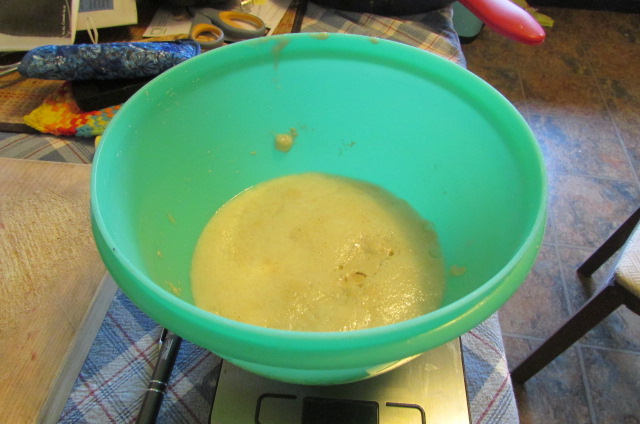
Note: If you know your yeast is active you can go directly to step 2 without waiting for visual proof. If you do opt to confirm, or have littles who want to see the yeasties plunge down into the sweet water and foam up to the top, here is what it will look like after a few minutes:
Yeast after a few minutes in sweet warm water will look like this. If nothing like this happens, your yeast is probably inactive and you need to get new yeast.
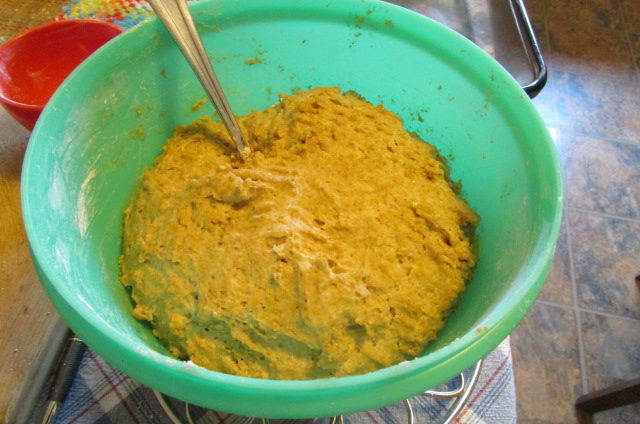
Step 2: Add flour and salt. Mix with a fork until all the flour is wet. No need to knead einkorn. In fact, after mixing, the dough gets half an hour to rest and rise. Don’t wait for it to double in bulk, just let it start rising and move to step 3.
All five ingredients for einkorn bread are mixed. The dough is too wet to roll or shape. But it will rise.
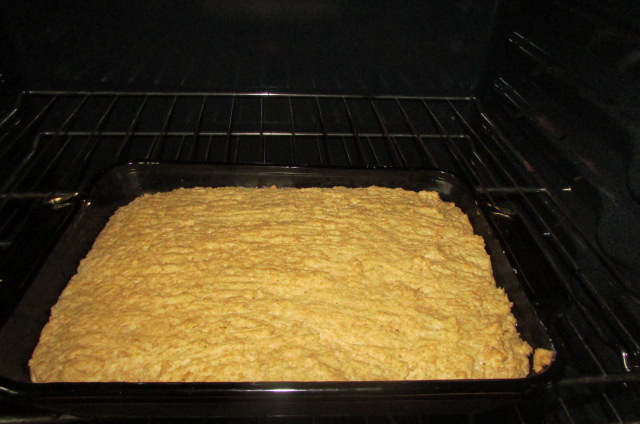
Step 3: Stir down and transfer dough to oiled baking pan. Keep in a warm place and allow to rise again for 30 minutes. Don’t expect it to double in bulk. If you let it rise until it doubles in bulk, it might collapse while baking. Note that I am speaking from experience. If this happens though, all is not lost. The bread will still taste good, get eaten, and you can try again in a couple of days.
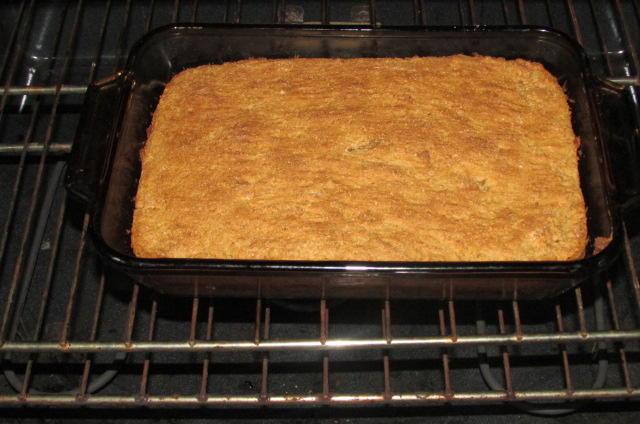
Step 4: Preheat oven to 375 °F and then put the pan in the oven to bake for 35 – 40 minutes.
It usually rises a bit more than what you see in the above pictures (will try to remember to take pictures again and put them in here for comparison) but even so the texture will be more dense than bread made with modern wheat.
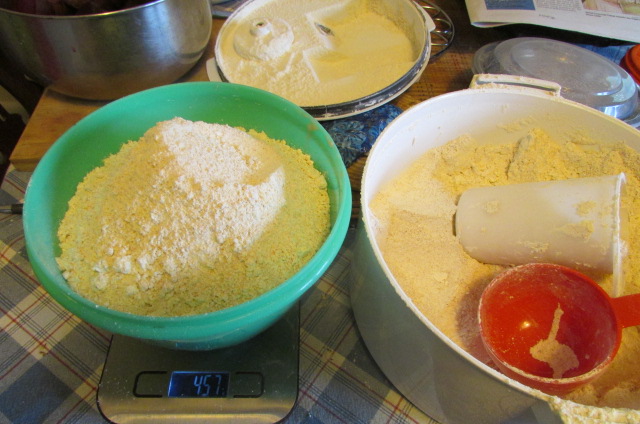
I found these proportions on the Jovial website and I have been using them ever since. So simple – one pound einkorn flour , one ounce honey, half a teaspoon salt, half a tablespoon of yeast, and 350 grams of water. Here it is in grams (mostly):
456 grams whole grain einkorn flour 350 grams water 28 grams honey 1/2 tsp salt 1 1/2 tsp yeast
Basically – stir everything together, let rest for 30 minutes. By this time it should start rising but not double in bulk. Stir down and transfer to an oiled baking pan. Let rise 30 minutes. Again, don’t wait for it to double. Bake at 375 for 35-40 minutes.
Don’t forget to preheat the oven so that it is ready at 375 by the time the 30 minutes are up. Otherwise the dough will keep rising while you wait for the oven. Timing is important in yeast-based baking, and especially so with einkorn where the rising time is short to begin with.
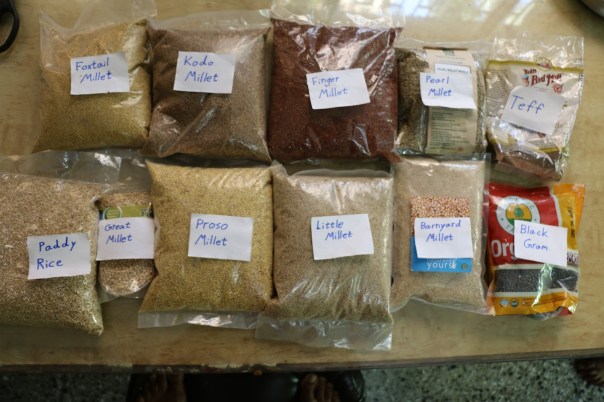
We’ve made idlis and dosas with little millet, kodo millet, proso millet, pearl millet, foxtail millet, finger millet and even made them with teff, which it turns out, is also a kind of millet. Oh, and of course we have made them with paddy rice. (Our millet-farming friends insist on calling what generally goes by the name of rice, “paddy rice” to distinguish it from some of the millets which in the local language are actually called varieties of rice, e.g. సామ బీయ్యము or वरी चावल (little millet rice), కొర్ర బీయ్యము (foxtail millet rice), सामक चावल (barnyard millet rice). In this case the term “rice” is used not as a name for the grain but for the whole form of the grain, as opposed to cracked grain (ravva), flattened grain (poha) or flour (atta).
I decided to make idlis using all 11 of these ingredients – 10 grains plus 1 legume.
Sometimes our millet dosas remind us of injera, a traditional Ethiopian dish we ate a few years ago when visiting friends in Boston. Khiyali and her friends enjoyed chanting, “eat the plate! eat the plate!” The injera was the edible plate on which the various toppings were served. After tearing off pieces of injera and scooping up the steamed and stir-fried vegetables, the rest of the plate, which had absorbed some of the flavors from the toppings, was fun to eat up all by itself.
Out of curiosity I bought a bag of teff at David’s Natural Market when I was in Maryland but did not get around to finding out how to make anything with it. By the time I left for India the bag was still unopened so I brought it along with me. When I searched for recipes for injera it seemed I needed teff flour and not whole teff. Of course this grain is so tiny it is almost like flour but anyway that gave me the free pass to try using it like all the other grains in my collection – to make dosas! How different could they be?
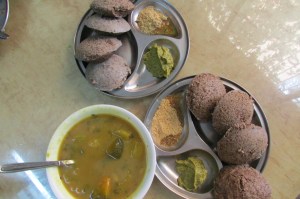
Tri-Millet Idli – made of Ragi, Sama and Proso millet along with Urad (Black Gram).
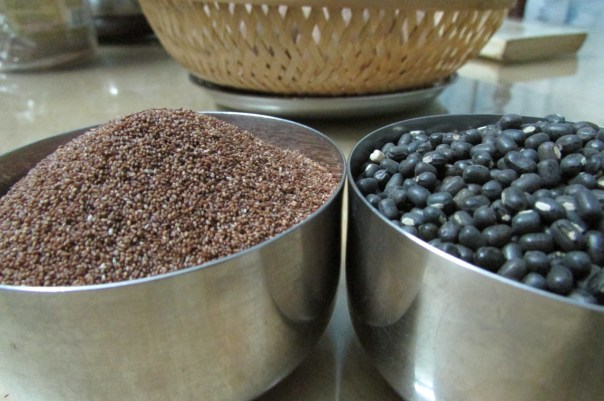
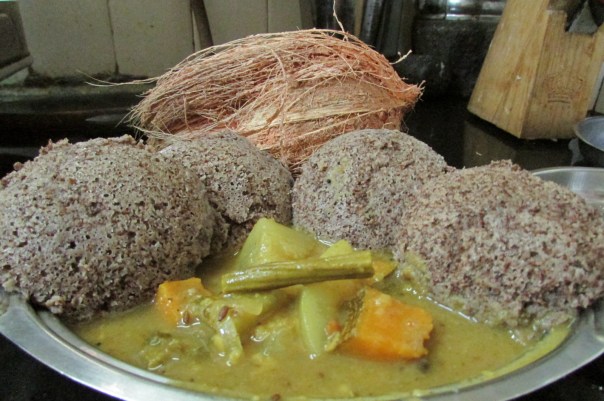
In Ragi Idli and Dosa, Take 1, I tried using whole ragi (finger millet) to make the batter used for idli and dosa. Since I’d never done nor seen any one do it before, I used part ragi and part rice along with the urad (black gram). Pleased with the results, I tried using only ragi and urad in my next attempt, Ragi Idli and Dosa Take 2. To my pleasant surprise, this batter also rose well and produced tasty idlis, albeit heavier than even my usual idlis which, being always whole grain, tend to be denser than white idlis, just as whole wheat bread is less airy than white bread.
¡Si se puede! I exclaimed when I saw the dough the morning after grinding it. It had risen. At last I could report to the naysayers, who thought that whole ragi and whole urad couldn’t be trusted to make a good idli, oh yes they can!
Soon after I arrived in India, I visited Balaji in Chennai and met the folks of the Tamil Nadu Science Forum which took Balaji by storm (or was it the other way around?) There I heard Ambarigi, Shanthi and other workers talk about the value of sattamavu, or ragi, sprouted and ground and easy to make into porridge. They focussed on encouraging parents to prepare it for young children and asked us and other well-wishers to help promote it by sponsoring a year’s worth of sattemavu for a family in need. This Ravi and I did and later started a program to distribute ragi in Srikakulam as well. It was not until six months after our daughter was born that we bought the stuff to make and eat ourselves.
As it turned out ragi porridge was an instant hit and we have been making it ever since. I didn’t venture further in the millet department until a couple of years ago when I started using every variety of millet I could find. Ragi, or finger millet was a regular part of our diet in the form of porridge. What to do with the other kinds? I tried them out in idli and dosa batter and they were great. Soon I was making idlis and dosas out of Proso Millet, Kodo Millet, Little Millet and Pearl Millet (bajra). I also made pulihara out of Foxtail Millet.
Not more than a few generations. And if you look at all things that have become white over the past century, one by one they are regaining their color. White bread, white pasta, white flour, white sugar, white rice are now recognized as more or less empty calories and are being replaced by their whole counterparts, on the brown to black side of the color spectrum. It is time for idlis to do the same.
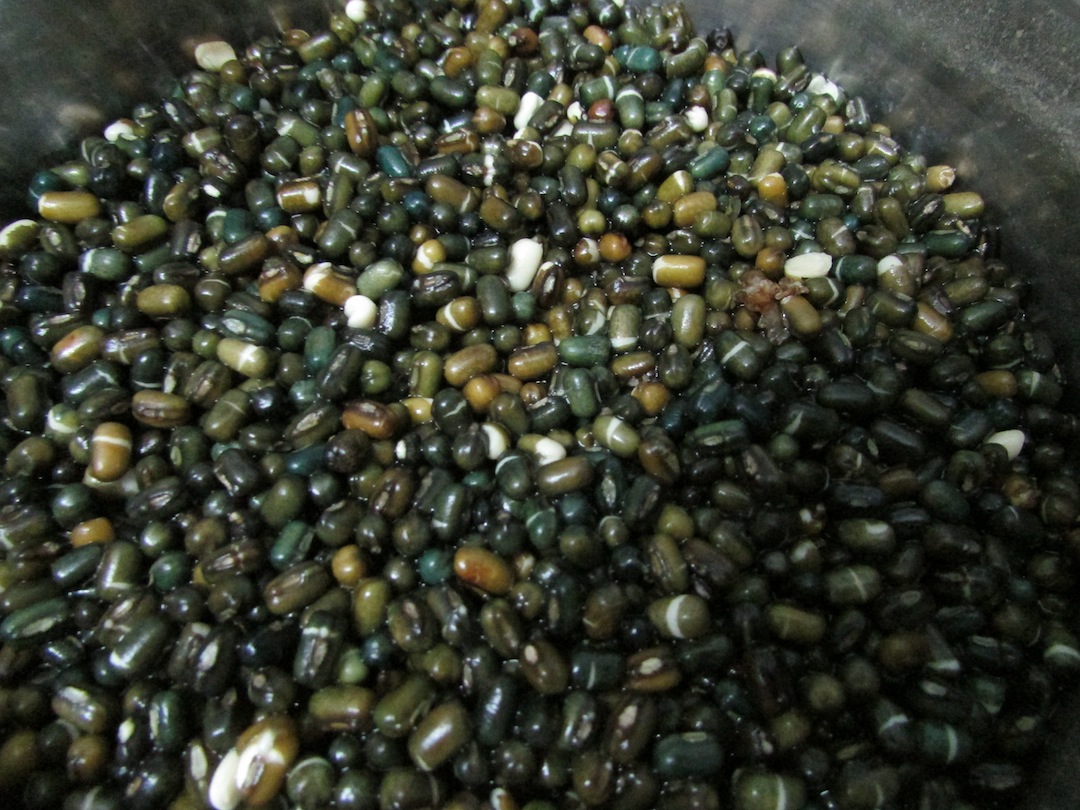
Black Gram (Urad): Soaked and ready to burst out of its skin! Urad or Black Gram attracts wild yeast from the air. As it ferments, the yeast makes the batter rise.
Send your questions on health, hygiene, learning, discipline, sleep, sanity, serendipity, chaos and any other aspect of parenting, real or imaginary to askammanow@gmail.com


 Ask Amma