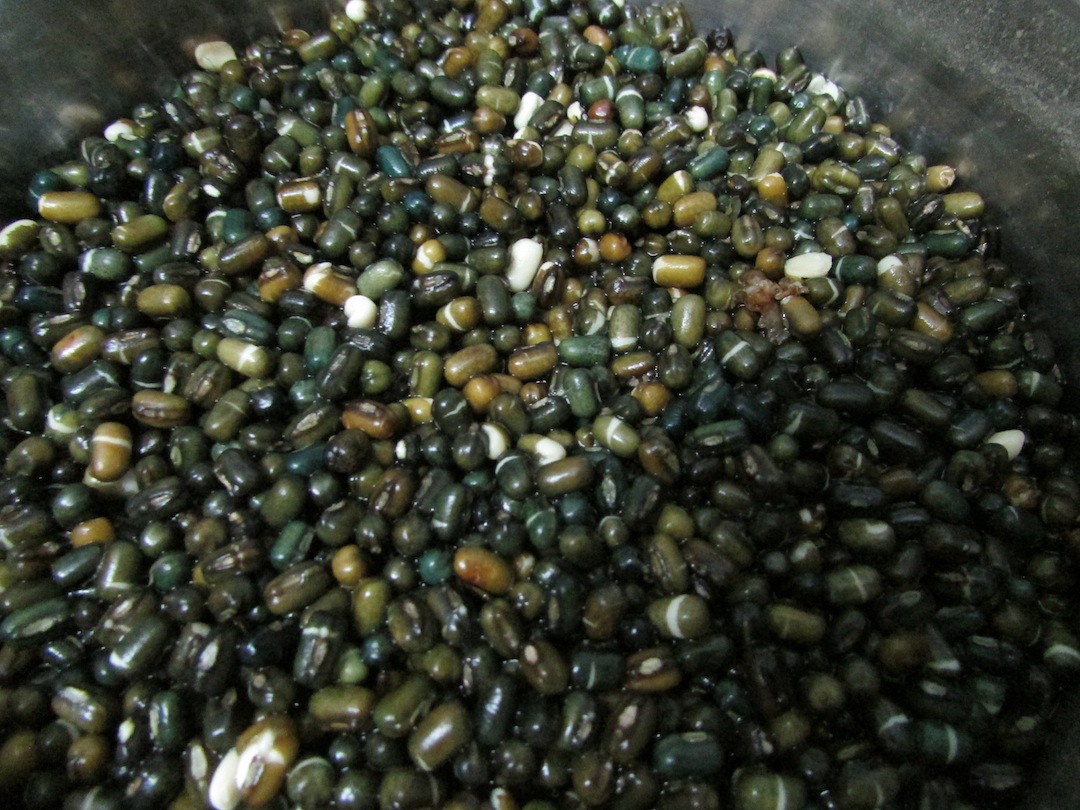
Food Colors and Food Culture
“No race ever yet ate black bread when it could get white; nor even brown, yellow, or other mulatto tint.”
Dr. Woods Hutchinson in McClure’s magazine, 1906.
In the mass conversion towards refined and processed foods that has swept much of the world over the past few generations, many foods normally occurring in a wide variety of earth tones, became white, as if a formidable fairness cream had descended upon the food industry. White flour, white sugar, white bread, white spaghetti, white rice, white upma ravva, white urad dal occupied the markets. At first a status symbol for those who could afford them, refined foods later became a status symbol for those who need not eat the coarser grains because they lived a delicate life and could hire workers to do their heavy lifting for them. Eventually they themselves became cheaper than their whole grain counterparts, while the nutritious polish and peels were diverted to the livestock industry.
Thirty years ago, Sidney Mintz unpacked the social, economic and political context of food in his seminal work, Sweetness and Power. The history of whiteness and power with respect to food offers much to explore. While evolutionary biology may account for our predilection towards the quick calories that processed foods offer, taste and food habits evolve under a variety of influences and cultural messages. Read the rest of this entry »