Ask Amma

Archive for the ‘What’ Category

Simple Raw Snacks

In Recipes, What on 31 July 2013 at 3:00 pm
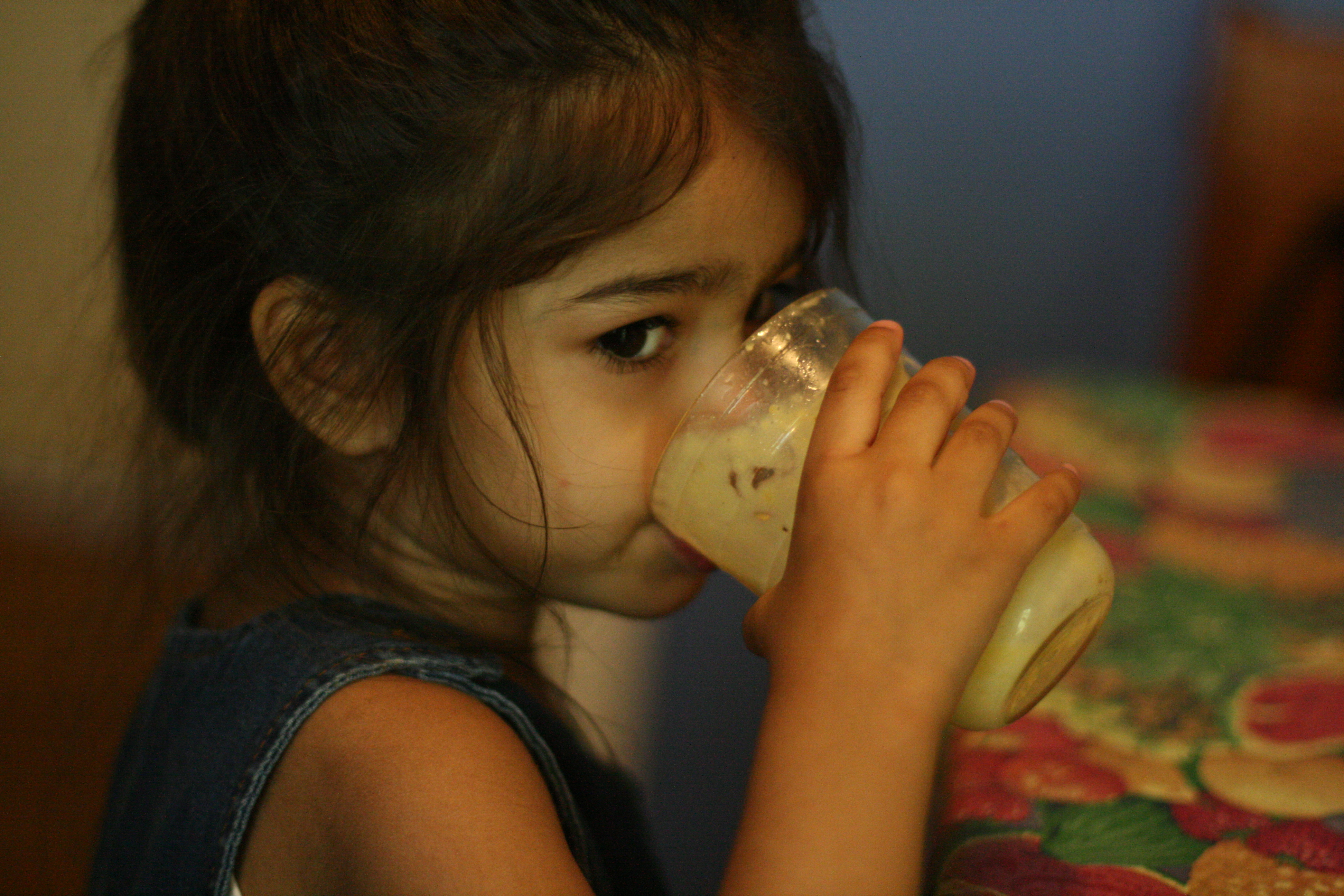
Rewa enjoys a fruit smoothie

Rewa enjoys a mango-banana smoothie

Watch this page, as we add photos of simple snacks that can be made in a jiffy.

These snacks may require cutting or blending but generally not cooking and are easy to prepare just-in-time, often with kids’ participation, lending a special sparkle to snacktime.  They are made of whole foods, usually raw.

Read the rest of this entry »

Kitchen Shelves

In What on 23 July 2013 at 4:10 am
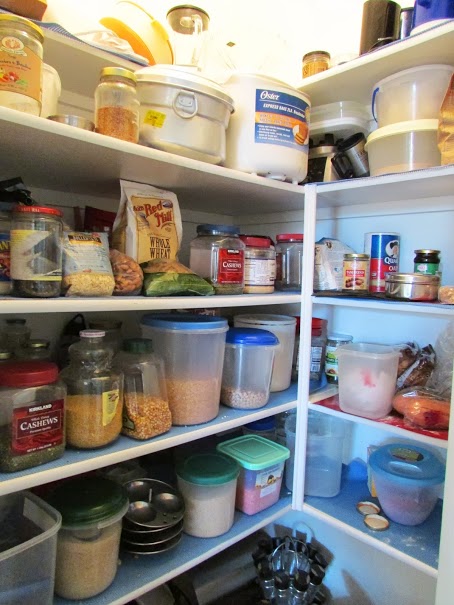
Kitchen shelves ... ready for cooking

Kitchen shelves … ready for cooking.

This is an ordinary set of kitchen shelves.  But today it brought back memories.

Long long ago in a land far far away I moved into a house of 13 people. Read the rest of this entry »

Baby Box

In What on 5 July 2013 at 8:00 pm

I used Grammarly to check the grammar on this post, because even Ammas can sometimes forget!

As part of the fascination with all things Finnish (or Finlandish as the non-Finnish might be wont to say), we are seeing a number of reports on the Finnish childhood starting with the tradition of the baby box.   A symbol of equality, which this baby box is given to every parent and contains clothes, nappies, etc.  Given that most people will use these items, it has the effect of giving all babies an equal start in life.

We are also learning that Finnish children nap outdoors even when the temperature is below freezing, and have done so for generations, getting their fresh air and being nicely bundled up at the same time.

Fascinating!

What is getting in the way of this otherwise unlimited love-fest with the Finnish way is the implication that babies need to sleep in a box.  It is simply not true and it is sad to see the idea being propagated on the back of an otherwise feel-good story on the socially responsible practices of Finland.

The right toys

In What on 8 June 2013 at 3:30 am

My son is 18 months old and it feels like he is growing up very fast.  I often have thought about “Am I giving him enough toys to play?” or sometimes “Am I giving him the right toys?  I have also heard about introducing new toys to children which are age appropriate, and it would be helpful to get your insight on this topic.

– mother of an 18 month-old in Irvine. 
 
Though almost anything can be a toy, play does not require toys.  Running, climbing, dancing, hide-and-seek, hopscotch and all kinds of imaginary games are fun and appropriate for all ages.   Coming to your question, what makes you think he needs more toys?
What are the things that your son reaches for now?  Observe the ways he engages with the people and things around him.  Young children often want to be involved in whatever those around them are doing, and so common household objects like dishes and buckets and cabinets become attractive.  If people in the family are into gardening, art, music, woodwork or other crafts, kids would probably want to get their hands on the shovels, brushes, instruments or other supplies involved.  Of course if the important objects seem to be the phone or laptop, kids will want those too.  Most of us would be better off spending less time with our gadgets, and diversifying our activities.
More important than selecting the right toy is cultivating a positive attitude towards work and play, which are one and the same for a child.  Why should we as adults break that continuum?  Often I hear children who are taking pots and pans out of the cabinets being told to “go play” and even given “toy” pots and pans for this purpose.  Rather than recognizing the child’s desire to be part of the action and including the child in their work, these parents impose a separation between work and play.  Having given the the plastic kitchen set to the child, do the parents join them?  No, they continue in the actual kitchen.  Children resist this second-class status, and hence the instructions to go and play and stay out of the kitchen are repeated and reinforced through various means, often including more toys.
What if you could share the space and material in the kitchen?  It would slow down your work, only if you narrowly define your work as getting that specific meal prepared in a timely manner.  But the work that you thought you were accomplishing by providing age-appropriate toys, can also get done by allowing kids in the kitchen.  Secondly, why be so possessive about your work?  Doesn’t the work belong to the family, including the child?  Taking items out of the shelf may seem useless or counter-productive to you, especially when you are putting them back, but if you hear what the child is communicating (I want to be part of the family, to do what the elders of my species do), it is not pointless.  And if it makes you feel better, there are some motor skills being honed, and spatial relations being worked out in the process.  When you believe the noise has a purpose, it is less likely to give you a headache.
As you mention that he is growing up fast, you may not be surprised to find that soon he can also do things like put the spoons away or wash some tomatoes or roll some chapatis, if you let him do it in his own way.
Another positive attitude parents should develop is a positive attitude towards dirt.  As Fraulein Maria said, “Children can’t do all the things they’re supposed to if they have to worry about spoiling their precious clothes.”  I can also summon the New York Times, “Babies Know:  A Little Dirt is Good for You.”  Much of the toy market is driven by a motive to engage kids in a way that keeps them indoors, sitting still and not getting dirty and not falling down and scraping their knees.  This is hardly age-appropriate!
So to recap – the way to encourage play is
  • provide plenty of space to run, jump, climb, etc
  • allow children to get dirty and take some risks
  • don’t separate work and play

And now for toys.  As the new / old wisdom on food says, “buy no food that you see advertised (Michael Pollan).”   Why not apply the same to toys?  Especially toys that talk, light up, or claim to develop the brain.   Of course such educational claims are part of the sales pitch for most toys, so I would probably just ignore them.  Also avoid any toy that is so expensive that you would not want to see it broken.  Toy inventor and scientist Arvind Gupta says that the best thing a child can do with a toy is break it … and on Arvind Gupta’s website you can find toys that you can put together and take apart all you want, since they are made of odds and ends.

Everything that toys are touted to promote – be it imagination, creativity, problem solving or – arise more meaningfully through self-directed interaction with real time, space, people and ordinary objects found in mission-critical places like the kitchen, bathroom, laundry room, or the puddle in the yard.  Toys from the store often have predesigned functions, whereas in the imaginary world of the child, anything can be anything.   A boat made of paper or tinfoil can be a raft or a coast guard vessel or cruise ship.  Even a bead or a twig or a leaf can be a boat.  Or a passenger.  Or an iceberg.

This slideshow requires JavaScript.

If I had to buy a toy, I would go for one without many features, that does not do much on its own (or require batteries!) or have a script already designed for it.  Even if it does, of course there is no requirement that one follow the given script.  So I would avoid suggesting the “right way” to play with a toy.
When one has only a few toys, their roles grow over time.   What I have found is that through years of playing, some toys are far more versatile than we imagined at first.   Even if you don’t buy any toys, you might get some as gifts or hand-me-downs.   To avoid accumulating too many toys, you could pass old ones along to make room for new, but a word of caution: if this happens frequently, then one of the lessons learned from the toy will be its disposability.

You may also like:
Substitutes for sugar and more …

In What on 18 December 2012 at 4:05 am

Insert nut in date after removing pit.  Use peanut, cashew, almond or any other nut.  Don't eat the clerodendrum!

Which sugar substitute is best? Dates, molasses or honey? I quit using agave.
– mother of two in Dallas

(a) is a whole food so I will go with (a).

I use any of these three, depending on the context. If you can get raw honey it is supposed to have beneficial properties that are destroyed in the high-temperature processing of the commonly available honey.

Sonika Amma adds:

I would prefer dates and molasses on the health quotient. Read the rest of this entry »

What do I do for cough and cold?

In Recipes, What on 17 October 2012 at 8:05 pm
So many people ask about cough and cold, so here we go.
As a student I used to observe that I would typically come under the weather right after exams were over.  It was as if my body was saying, “now it is my turn.”    So be fair and give yourself some TLC (Tender Love and Care NOT Tomato Lettuce and Cheese but you can have some of that too. Minus the Cheese. Signed, Humor Consultant*) rather than insisting on business as usual.  My three point plan for recovery was:
1.  aggressive sleeping:  sleep until you can’t sleep any more
2. More gentle readers may wish to call the second point “continuous water sipping.”   For those young enough to breastfeed, they can nurse and sleep at the same time.  I nursed my daughter through several fevers this way.   Read the rest of this entry »

Vitamin D for baby?

In What on 5 September 2012 at 10:15 pm

 I read an article about the need for Vitmain D supplementing for exclusively breastfed babies.  We will start taking her in sunlight starting her 2nd month but I am not sure if that will suffice.

– mother of a newborn in Texas
Why avoid sunlight now?  Your baby will make vitamin D from sun and also get it through your milk, provided you are getting enough sun. How much sun you need varies according to latitude and skin type but even if you take a walk or play outside for half an hour you’re in business, provided the sun was shining and actually reached some area on the body that was not covered with sunscreen or clothing.  Under-exposure to sun is as risky as over-exposure.  Our Old Grey Fair Lady also cautions about the risk of too much Vitamin D.  Epidemiology Professor Robyn Lucas says in To D or not to D, “it’s not possible to make too much vitamin D from sun exposure – but that is a very real possibility from ingesting vitamin D.”

See also Kelly Mom:  How much sunlight is needed to generate adequate vitamin D?

Intellectual Stimuli in Two Minutes

In What on 23 August 2012 at 3:32 am
 After becoming a mother I just seem not to have time to read anything more substantial than ingredients lists and blog posts.  I miss my college days, I can’t access the online journals anymore, and rarely get to read anything that gives me the same surge of intellectual excitement. 
– Mama, no longer in the Ivory Tower
 
Amma feels your pain.  Fortunately, the precious balm is at hand.  PhD students around the world have given a wonderful gift to busy people who thirst for quick fixes of academic thought bubbles, with the encouragement of Jorge Cham, cartoonist behind PhD Comics.  Here is a treasure trove of newly minted and in-progress dissertation research explained in two minutes!  Browse the list and hear about a variety of topics being pursued in Universities from Sorbonne to Slovenia, Tehran to Toledo.  It is amazing!  Almost better than being there at the defense itself (Ah … nostalgia!) Read the rest of this entry »

Play or Eat? Why not Both?

In What on 26 May 2012 at 1:16 am

Our son turned-over more than a month and a half back and is extremely active – it has become challenging for us to feed him. He wants to play and eat at the same time – any thoughts on how to approach this phase? Also, any ideas on activities for him?
– Appa of a 5 month-old in Maryland

Since he is, as you say, extremely active, I am wondering why you think he is not getting enough food?

Keep in mind that play is a way of feeding the mind, which hungers just as the body does. A baby who knows where the milk comes from and how to get to it, will nurse. Do you think he is playing "too much" and not nursing "enough?" He may think differently. Trust him. Play with him. If you are still concerned that he is not nursing enough, proactively find times & places that are calm and encourage nursing. Use the sling, use skin-to-skin contact, use music. What I found was that taking a walk just around sunset time, with baby in the sling and able to nurse via nursing kurta was very much conducive to nursing and sleeping. Perhaps it resembled the womb. There were a few months when I did this every evening.

Sometimes babies go through phases where they are so keen to play while awake that they save all their nursing for night and naptime. Lest hunger for play take priority over hunger for food, pack in plenty of play so that he is satisfied and works up a good appetite. Play can take the form of singing songs, clapping, peek-a-boo, dancing, bathing (try all at the same time!). Babies also enjoy listening to conversations and watching others work, and generally being involved in whatever is going on. Soon he will be "helping" you with your work. I would recommend that you get a toy phone, preferably one that looks like a land line, and avoid exposure to the cell phone for as long as humanly possible. Likewise I would keep him away from any screen of any size.

Toys like rattles, cups, balls, socks are fun, but leave some scope for him to discover his own playthings. You will discover the hidden wonders of many ordinary things around the house.

Gestational Diabetes – what to eat?

In What on 9 May 2012 at 3:52 am

Dear Amma:  My doctor has put me on medication for gestational diabetes.  I have tried to keep my glucose levels down but it is very difficult – the other day I ate just a couple of spoons of potato and the level shot way up.  I get hungry all the time and I am running out of ideas for things to eat that will keep me full.

 – Eating for 2

Dear Eating for 2,
You know the drill:  Eat a variety of foods that are high in fiber, have a low glycemic index and are nutritious.  National Institutes of Health offers these diet recommendations.

To start, consider that whole foods tend to have a lower glycemic index than their refined counterparts.  Or in the words of The World’s Healthiest Foods,  “Foods that are white tend to have a higher glycemic index.”  So make sure whatever you are already eating is whole.  Your rice is brown, your bread is whole-grain or sprouted grain, and your fruits and vegetables, mung dal, urad dal, etc are unpeeled.  Want even more fiber?  Stir some wheat bran or oat bran into the batter you use for dosa or pesarottu.

Next, try to diversify your grain basket, with barley, ragi and other varieties of millets, oats, and quinoa.  Kamut and amaranth (राजगिरा or चौलाई) are available puffed, for easy snacking.

Let’s not forget omega-3 fatty acids, found in a variety of vegetables and notably in flax seeds, walnuts and their oils.  Your entire family will benefit from these improvements, and baby will be used to a healthy, diverse, whole foods diet from the start!  Note that flax seeds are so small that you have to take care to chew them. If you don’t they may pass through undigested.  If you grind your flax seed, you should eat it the same day – or within a few days if you refrigerate it.  Ground flax seed makes a decent dip for idli, dosa, etc.

Though I did not have GD, I too remember hungering for new and different foods in the third trimester.  After eating one dosa I would still be ravenous, but not want another dosa.  Repeat with one hummous sandwich, one plate of vegetables, and so on.

One trick that helped me stay full longer was adding wheat germ to whatever I was eating.  I would add a spoon or two to my rice and sambar, or sprinkle it on bread along with a spread.  Stir some into a bowl of oatmeal or upma.  A tablespoon of wheatgerm contains 2 grams of protein, so a little goes a long way.

Are your idli and dosa whole grain?   You can increase their protein content by using 1 cup dal per 1 cup rice.  A treasure trove of recipes using several varieties of millets includes simple preparations like కొర్ర పెసరోట్టు – see korra pesarottu on the site of Earth360.

Looking for ways to eat oats?  Try Oatmeal Sabzi or steel-cut oats.  How about quinoa?  Here is a simple recipe for delicious quinoa upma.